Kamis, 12 April 2012

Taking in the Scenery in Vayots Dzor


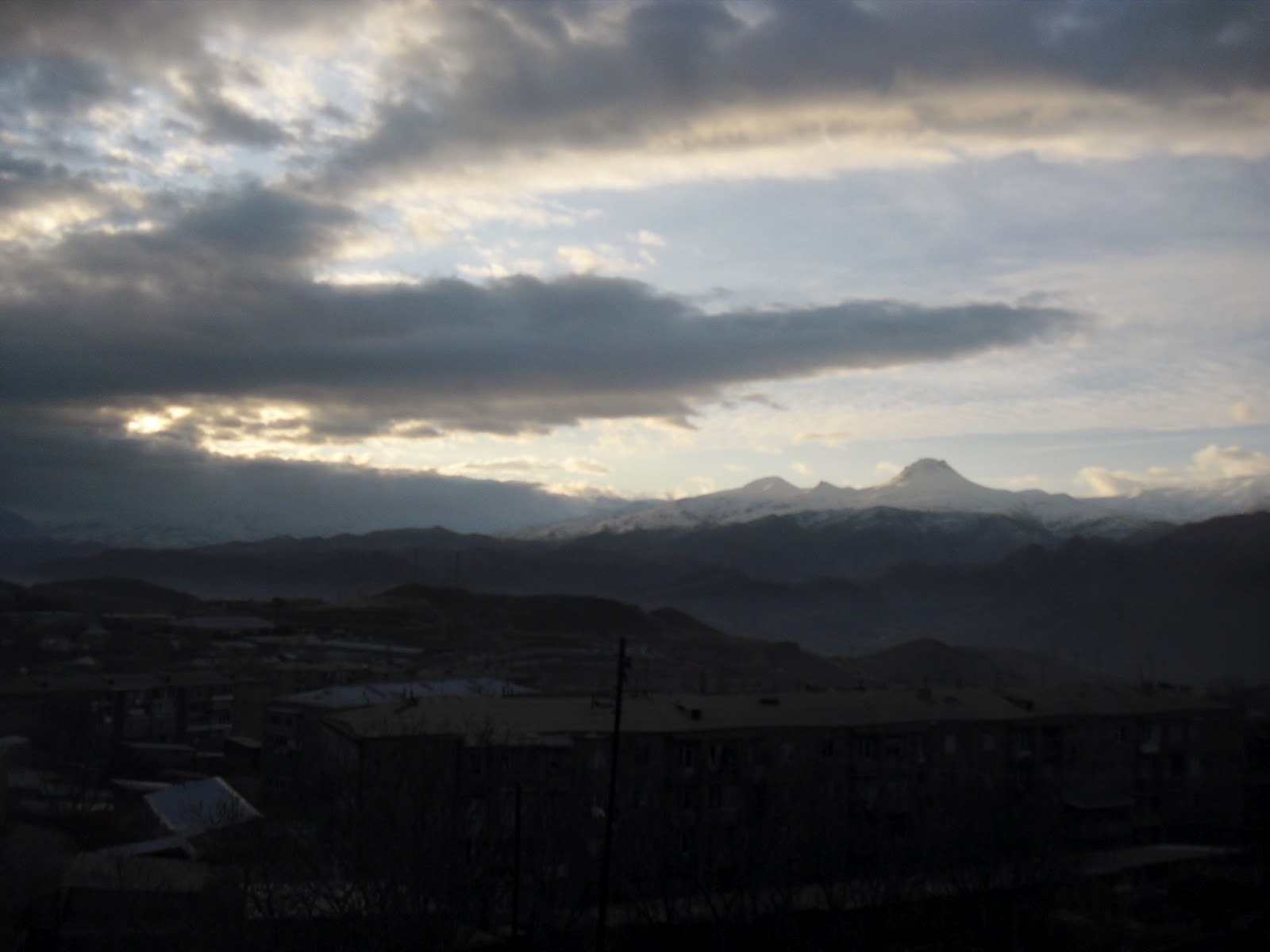
A fall day in Yeghegnadzor, Armenia
As I started packing for my two plus years in Armenia, I looked down at the mess on the floor and wondered how I was going to carry enough for my stay.  Something had to go.  Many things had to go.  The mammoth Minolta camera I bought more than twenty years ago and its accompanying lenses were primed for the list of things to leave behind.  But how could I go to Armenia for 2 years without a camera?  Just as the decision making process was beginning to seem overwhelming, a friend stopped by and placed in my hand a small digital camera.  I was so glad to have it, but I doubted that I would be able to produce photographs of anywhere near the same quality as I would have with my ancient film camera.  Well, I was wrong.

Encouraged by my friends at home and inspired by the amazing Armenian landscape and seemingly never-ending light show, I have taken hundreds of photos.  I must admit that many of my best pictures were taken from my balcony or kitchen window.  Sometimes, I am almost embarrassed that the pictures that I share with my friends and family were taken when I happened to wander out on my balcony.  But in the end, why should I be?  These views from my little studio apartment have made my stay here unforgettable.  The Armenian landscape never disappoints, no matter what the season or time of day.  I hope you will forgive my amateur enthusiasm and enjoy these photos as much as I enjoyed watching them unfold.

The following pictures were taken from my balcony which faces north east:
I happened on this double rainbow quite by accident. I got up to go into the kitchen and was dazzled by the extremely bright light coming in through the balcony door. When I stepped outside to investigate, I saw in front of me a complete double rainbow, surrounded by dark clouds on either side and an intensely bright light in the center. It lasted just a few minutes, but it was enough time for me to get camera.

 The unusually snowy winter kept me indoors much of the time, but it gave me plenty of opportunities to conduct a seasonal study of the view from balcony.
After weeks of snow, this was my first sunrise. It was worth the wait.


   The following pictures were taken from my kitchen window which faces south east.

   This is my mountain, I have taken too many pictures of it to share. These are a few of my favorites. 
   This one was taken at sunrise.

    This picture was taken during a wicked storm. I've always loved storms, but the play of light is unlike 
    anything I've seen anywhere else.


   There is pleasure in ordinary things too. On a sunny morning, the neighbors 
hung out their laundry to dry. The clothes promptly froze solid.


Rebecca is an American Peace Corps volunteer who lives and works in Vayots Dzor marz. The views and opinions expressed are hers and do not necessarily reflect those of the U.S. Peace Corps. 


Selasa, 03 April 2012

Bagratashen


The village of Bagratashen is located on the Armenian-Georgian border. The Dbet river separates the two countries, with the border crossing just outside the village. Bagratashen was well-known by locals for the bustling foreign market which shut down 2 years ago, and its sunflower industry which still thrives. In summer months, fields of sunflowers decorate roads and pathways which provide for scenic flat-land hiking.

At one of the lowest altitudes in Armenia, Bagratashen is usually remarkably warmer than surrounding towns and villages. The border crossing has a hotel, ATM, cafe, and duty-free shop. Shops in the village have Ritz-like crackers which cannot be found anywhere but in larger cities in Armenia. During certain times of the year, you can buy an entire roasted sunflower head to eat. Traveling towards Vanadzor from Bagratashen, produce from a Kurdish village is sold along the road and you will see reconstruction from a devastating landslide that took place in 2011. In my 2 years of living in Armenia, I have never witnessed more beautiful landscape and rock formations than when travelling towards Vanadzor from Bagratashen.

Though not an obvious destination for travelers, Bagratashen has certain charms and would benefit greatly from increased tourism. A taxi from Bagratashen to Noyemberyan is usually 3,000 dram, a bus or "marshutni" to Vanadzor is 1,000 dram and Yerevan is 2,200 dram. If you are traveling through to Tbilisi- you can usually walk through the customs house, then haggle your way onto a marshutni at a discounted ticket price on the Georgian side. The UNESCO World Heritage Sites Haghpat and Sanahin are also easily reachable by a 30 minute taxi ride towards Alaverdi.


Danelle is an American Peace Corps volunteer who lives and works in Tavush marz.

Selasa, 27 Maret 2012

What is Easter in Armenia?


Easter is tasteful and energetic, colorful, blossoming, because lent is over and spring joy enters everyone’s heart christening for resurrection and new life.  Armenia’s Easter is truly lively. It is a holiday one won’t stay home. Aspire, optimistic, buoyancy and hope gyrate in the air. Churches and streets are full of families, young people, and children. Aroma of incense and voices of praises emerge from the churches where people are endlessly moving in and out and around.

Easter (in Armenian Zatik) is belovedand the most expected holiday in Armenia. Armenia has been Christian country since 301, and since then Easter has been popular and participative public holiday. Everybody in the streets, at home in friendly and family gatherings greets each other and says: “Christ has arisen". The answer is “Blessed is the resurrection of Christ".


Lenten fasting season lasts for 40 days before Easter. Christians, who want to fast, keep themselves away from sins and eat only vegetarian dishes. During fasting Christians attend the church and confess their sins, read Bible, keep themselves away from lasts. Towards the end of lent season a week before Palm Sunday is celebrated, when Jesus triumphantly entered Jerusalem. It’s a wonderfully decorated day: streets and homes are full of palm branches, people are crowned by flowers.

During lent Armenian families also put lentils or other sprouting grains on a tray covered with a thin layer of cotton, and keep it in a light place of the house until Easter when sprouts appear. These green sprouts, symbolizing spring and awakening of nature, are the “grass" on which people place colored eggs to decorate the Easter table.

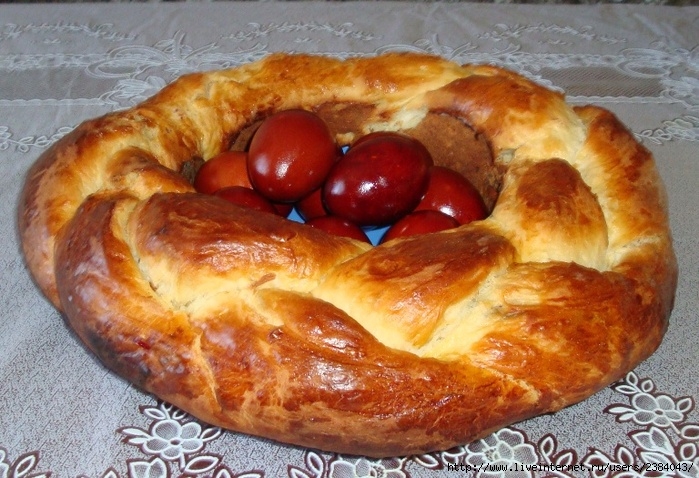
Next Easter day is a day of joy and triumph against cold and darkness. Spring holiday and resurrection! Armenians have preserved the beautiful biblical lore which refers to red eggs and cheorek (sweet bread): “When Christ was crucified, his mother took some eggs and bread wrapped in the shawl. When the Mother saw her Son crucified and his arms bleeding, she knelt down and cried. The Mother’s tears and Son’s blood dropping on the shawl colored the eggs and bread. Then the Mother put the shawl on her head. Since that day people began coloring eggs red on Easter day and women began wearing shawls when visiting church.

Everywhere in Armenia in Yerevan and in every city Easter is celebrated with traditional events, dishes, songs, greetings. Especially remarkable are revels and merriments in Ejmiadzin, Dilijan, Garni and in many other places. Armenia hotels offer Easter discounts.

The Easter atmosphere will be proliferated upon everyone. Special Easter liturgy will be held in Main Cathedral of Armenia in Ejmiatsin and in all other acting churches.  Garni Pagan Temple also will join the celebrations and provide traditional Easter eggs, as presents.

Rabu, 07 Maret 2012

To Gyumri by Train... (Part 1)

"100 Years of Armenian Railroads"
For those who have a bit of extra time, an aversion to crowded marshutkas, or enjoy the romance of ancient cities and rail travel, a day-long or overnight excursion to Gyumri by train is a fabulous way to see Armenia's second city and escape the heat of a Yerevan summer for the cool mountain air of Shirak Marz.  Trains leave the Sasunsi Davit railway station at 8:00am and 6:10pm every day rain, shine or snowstorm.  You can buy your ticket for 950 dram at the station or on board the train.  The train itself is a Soviet 1955 "elektrichka" model, a piece of living, working history.  If you take the evening train, arrive early so you can have some time to see the Armenian Railways museum, consisting of and located in a 1930's locomotive and railcar housing exhibits on the construction of the Caucasus railway system and a caretaker who will show you his 20, 30, 40 and 50 year service medals for working on the railroad system.

At the controls
As you leave Yerevan, look to your right to see the Erebuni airport, and if you're lucky spot a MiG or Russian transport plane landing or taking off.  Soon you'll pass through Etchmiadzin and be in the valley of the Arax river, where you can watch the stunning panorama of Mt. Ararat pass by out the left window, while Mt. Aragats passes by on the right.  Take the chance to get up and walk around, stick your head out of the window or chew some sunflower seeds.  Unlike a marshutka or taxi ride, you can stretch out and feel comfortable.

No tourists were harmed in the making of this blog.
The Armenia Tourism Blog does not endorse sticking your head
 out of moving train cars.
Soon you'll be in Armavir City, capital of Armavir Marz, home to one of Armenia's biggest wholesale produce markets.  You won't have much time to shop, but unless you're looking to buy a crate of plums or an entire sunflower, you won't be able to.  This is a wholesale market, after all.  Try to buy a single piece of fruit and the vendor will laugh and give it to you as a gift.  Grocers from Gyumri come here to do their shopping, then load crates of produce on the train to take back to their shops.  Help load a crate or two, or merely inquire what's inside, and you can be guaranteed a few snacks to pass the journey.  (See our post "The Fruit" for more about fruit in Armenia and pictures of the Armavir produce market.)

The evening train arrives in a village in Aragatsotn Marz
After Armavir, the train will turn northwards and skirt through the highland plateaus and small villages of Aragatsotn and Shirak Marz.  If you've taken the evening train in the Spring, Summer or Fall, you can watch the sunset over the mountains of Anatolia and spot Yezdi herding encampments along the train track.  Take the opportunity to snap some pictures, join a pickup card game with your fellow passengers or just relax and enjoy the view.  You'll be in Gyumri soon...

Stay tuned for To Gyumri by Train Part 2-Your Day in Gyumri

Sam is an American Peace Corps Volunteer in Armenia.  He lives and works in Aragotsotn Marz, where he teaches English in village schools. The views and opinions expressed are his personally and do not necessarily reflect those of the U.S. Peace Corps.   
A version of this post originally appeared on the Author's blog: www.heyamerikatsi.com 

Read more posts from Sam:
The Fruit
Starting Farmstay B&B in Armenia - Part 1
The Soviet Arcade Games of Giumri
Undiscovered Armavir Marz