Tampilkan postingan dengan label discover Armenia. Tampilkan semua postingan

Jumat, 26 Oktober 2012

The Lovers’ Park, the Everyone’s Park

Photos © Boghossian Gardens

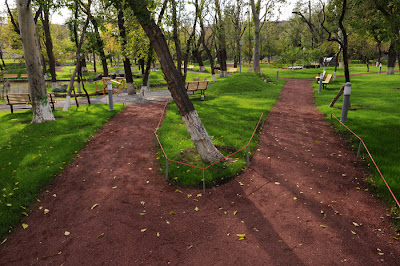
The so-called Pushkin park (situated on Baghramyan avenue) used to be one of the most favorite places for many Yerevanians. Huge trees, green areas, merry-go-rounds, happily screaming children, young mothers with baby carriages and old wooden benches – all these will always remain in the childhood memories of many people.


In the recent years the park was, mildly said, in a poor condition – the merry-go-rounds were silent and the trees stood alone with no children playing hide-and-sick around them.
In 2006 the park was temporarily closed to public, fortunately, for reconstruction works. Posters depicting the new design of the park appeared on Baghramyan avenue. People who had left nice memories in the park, filled with hope and expectations.
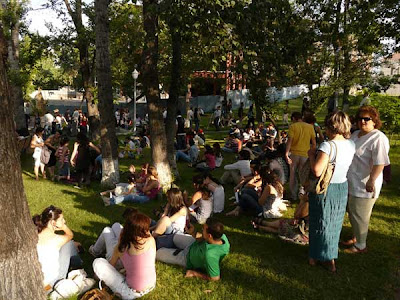
In 2009 the park, renamed as the Lover’s Park, was reopened. Soon it became a favorite place not only for lovers. It is just wonderful for evening walks, for meetings with friends and for the first dates.

The new park does not remind the old one, the design is completely modified. Fortunately, the green areas have been preserved. Now they have a more modern look in contrast with the red color of the sand. Several small fountains, waterfalls and a small pond were added to the park, the old benches were replaced with new ones. The most important thing, however, is the warm and welcoming atmosphere that the Lovers’ Park inherited from the old Pushkin Park.
Today different events, festivals, open-air exhibitions are organized in the park. It is also the most popular place for wedding photo-shooting. You will definitely meet a newly-wed couple in the park on Saturday and Sunday afternoons. 


Photos © Boghossian Gardens
-->

Jumat, 12 Oktober 2012

Happy Birthday, Yerevan!!!

On October 14 Yerevan will mark its 2794th anniversary. The history of Yerevan dates back to the 8th century BC, with the founding of the fortress of Erebuni in 782 BC by king Argishti I.

Each year the municipality of Yerevan organizes festive events and celebrations, this year is no exclusion. The festive events will be held on a large scale. The joyful atmosphere of the actions provided for October 14 will spread all over the capital. Various events have been provided on 26 stages. On this day the traffic in the center of the city will be stopped from 08.30.

In accordance with the tradition, the main event of the day which this year has the motto "The capital of my heart" will be held in Republic square at 19.00. Famous foreign groups and singers will take part in the concert part. A bright firework will complete the concert and a disco for young people will follow it.

The events in different parts of the city will start early in the morning and continue till late at night. Below is the list of events of Erebuni-Yerevan 2794 celebrations.

10.00Precession of watering trucks along the streets of Yerevan
11.00 Washing the monuments of Yerevan
12.00-12.30Drama performance (the square adjacent to the Erebuni reserve-museum)
12.30-14.00 Dramatized march of the participants of the event (from the Erebuni museum to Republic square)
11.00-12.00Solemn program of the 185th anniversary of Erivan fortress occupation (Paskevich hill)
14.00-15.00Festive procession (from Russia square to Republic square)
14.00-18.00 Children’s stage (puppet shows, games, clowns, conjurers and fairytale heroes (Children’s park after Kirov)
15.00-18.30Greeting performances of the administrative districts (St. Shahumyan square, Mashtots-Buzand streets junction)
14.00-18.00 Show of retro cars (Mashtots avenue)
14.00-18.00 Biennale (France square)
14.30-18.30 City of masters –ceramics, carpet weaving, embroidery, wood craft (North avenue)
14.30-18.30Karaoke (North avenue)
14.30-18.30 Street ball competitions (North avenue)
14.30-18.30Drama stage (North avenue)
14.30-18.30Circus stage (North avenue)
14.30-18.00Poetry stage (Moscow park)
15.00 Marathon race 2794 meters (from Haghtanak bridge to Matenadaran)
15.30 Cycling (Mashtots avenue)
15.00-17.30Making and advertising video about Yerevan (Mashtots avenue)
15.00-18.00The stage of the nations of the world – performances of the ethnic ensembles of the national minorities living in Armenia (English park, near Sundukyan theatre)
15.00-18.30Pop stage (square after St. Shahumyan)
16.00-18.00Aircraft modelling shows (Azatutyan square)
17.00-19.00Windsurfing show-competitions (Swan lake)
19.00-23.00 Discotheque (Azatutyan square)
19.00-23.00Jazz stage (Cascade complex, Gafeschean fund)
19.00-23.00Rock stage (Charles Aznavour square)
18.00-22.00Classical music stage (the square near the monument to Komitas)
19.00-23.00National music stage (Mashtots-Buzand junction)
19.00-22.00Gala-concert “The capital of my heart” and festive firework (Republic square)
22.10-23.00 Discotheque (Republic square)

An interesting poster devoted to the 2794th anniversary of Yerevan

Did you know?

1. The two most discussed theories on the origin of “Yerevan” are:

 - The city is named after the Armenian king Yervand IV, the last leader of the Orontid Dynasty and founder of the city of Yervandashat
 - “Yerevan” is a derivation from an expression exclaimed by Noah. While looking in the direction of Yerevan, after the ark had landed on Mount Ararat and the flood waters had receded, Noah is believed to have exclaimed “Yerevats” (“It appeared”).


2. The seal of the city is a crowned lion on a pedestal with the inscription "Yerevan." The lion's head is turned backwards while it holds a scepter using the right front leg, the attribute of power and royalty. The symbol of eternity is on the breast of the lion with a picture of Ararat in the upper part.

3. On 27 September 2004, Yerevan adopted an anthem, "Erebuni-Yerevan", written by Paruyr Sevak and composed by Edgar Hovhanisyan. It was selected in a competition for a new anthem and new flag that would best represent the city. The chosen flag has a white background with the city's seal in the middle, surrounded by twelve small red triangles that symbolize the twelve historic capitals of Armenia. The flag includes the three colors of the Armenian National flag. The lion is portrayed on the orange background with blue edging.


Rabu, 10 Oktober 2012

Cascade: the Open-Air Museum


The so-called Cascade complex, located in the center of Yerevan is the favorite place for many Yerevanians, especially the youth. The complex has passed a long and difficult road until it reached us with its today’s look.

The Cascade project was planned by the Armenian architect Alexander Tamanyan (1878–1936), who aimed to make Cascade a bridge between the northern and central parts of the city, decorated with waterfalls and gardens. However, the project was “frozen” until the second half of the 20th century, when Yerevan’s Chief Architect Jim Torosyan restarted it. Some modifications were made to the project and the construction works of the updated plan started in the 1980s. The Armenian earthquake in 1988 and the break-up of the Soviet Union in 1991 were also obstacles for the Cascade project.

Garden Terrace, Cascade
The renovations of the complex restarted only in 2002 by Gerard Cafesjian, which resulted in what we have today – the Cascade complex, housing the Cafesjian Center for the Arts.

The Cascade complex is indeed the favorite part of Yerevan for many Armenian, offering a whole complex of benefits. It serves as a park for kids, as a place to relax, to read books, an open-air concert hall and an open-air museum. Some of the artworks from the private collection of Mr. Cafesjian are presented outside of the building. 

Each month the Center offers us new pieces of art, making us visit Cascade regularly for latest updates. The collection includes works from by Fernando Botero, François-Xavier Lalanne, Barry Flanagan, Jaume Plensa, Lynn Chadwick and others.

Inside the building there is an escalator that leads to the terraces of Cascade stairway and the halls of the Cafesjian Center for the Arts, where visitors can find interesting art pieces.

Three Divers Terrace, Cascade
The view that the Cascade stairway offers is something to speak about. Te higher you climb, the beautiful the scenery becomes. A wonderful view of Yerevan city opens in front of you, which is much more admirable in the sunset.

And at the end – a few facts about the Cascade complex:

Number of steps - 572
Distance from the bottom to the top of the Cascade: 302 m / 991 feet
Width: 50 m / 164 feet
Incline: 15 degrees

Jaume Plensa, Shadows I, 2006
François-Xavier Lalanne, Carpe (Très Grande), 2000
Fernando Botero, Woman Smoking a Cigarette) 1987


Yue Minjun (China), Untitled, 20th century


Joana Vasconcelos (b. 1971), Portugal, Pavillon de Thé (AP), 2012
Peter Woytuk, USA, Kiwi, 2011


Lynn Chadwick, Sitting Figures, 1980

Photos © Cafesjian Center for the Arts
Barry Flanagan, Big Boxing Hare on Anvil, 1984


Kamis, 27 September 2012

Happy World Tourism Day!


Since 1980 the whole world celebrates the International Tourism Day on September 27. It is the day when the Statutes of the United Nations World Tourism Organization were adopted (1970).

The Armenia Tourism Blog congratulates you all on this wonderful day, wishing you a lot of interesting travel destinations, new feelings and experiences. 

Happy World Tourism Day!

Rabu, 26 September 2012

Meghri: the Sweet Part of Armenia


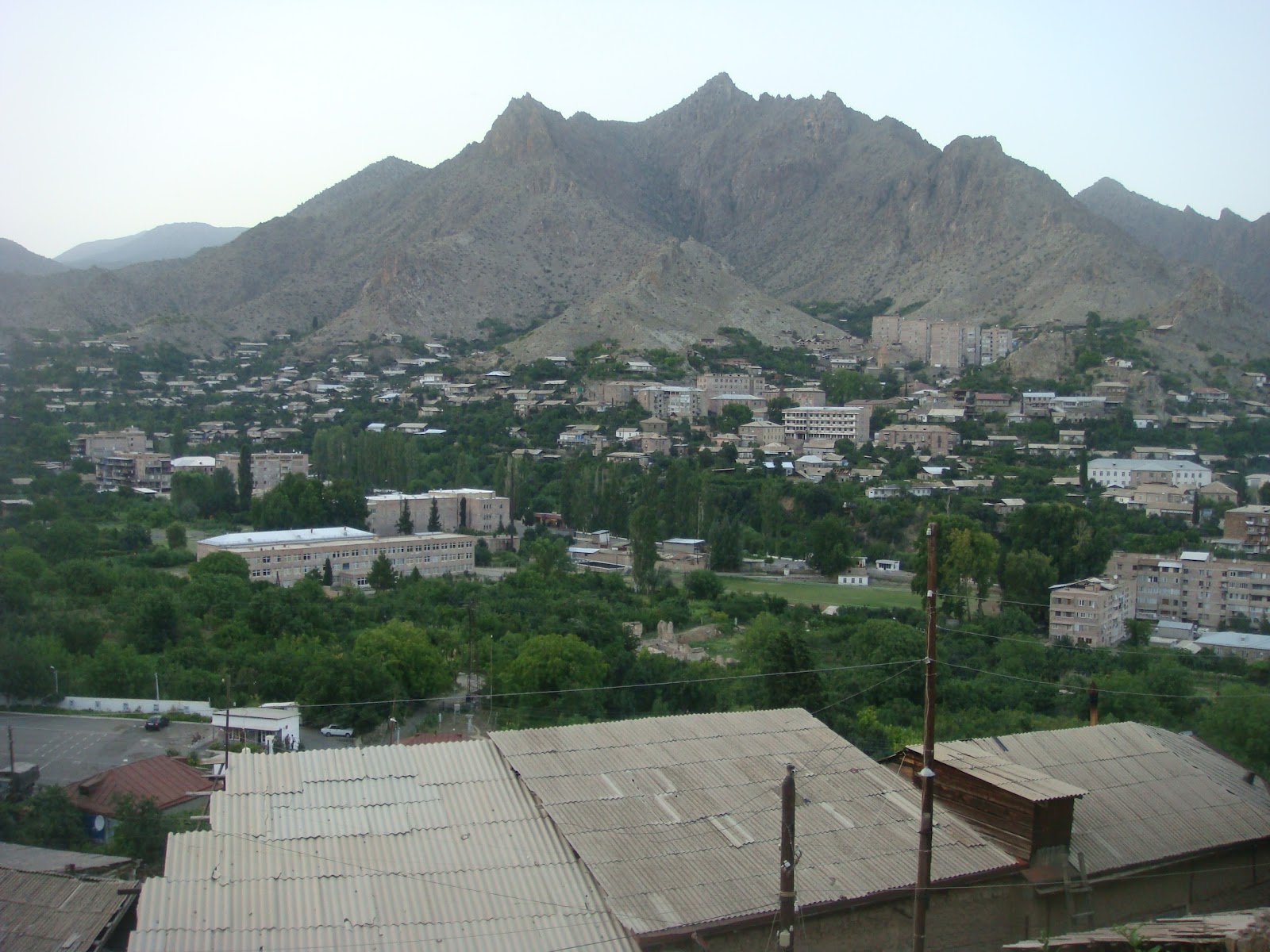
Meghri town is situated in Marz Syunik near the Armenian-Iranian border. Meghri is one of the most economically developed towns in Armenia.

Food industry is mostly developed there: the town has a bakery, a cannery and a winery.

Visiting Meghri you can visit a number of beautiful and interesting places, the Meghri fortress (17th century), St. Astvatsatsin church (17th century) and Meghri Monastery (15-18th century) among them.

Meghri is considered to be the “sweet” part of Armenia. Due to its comparatively mild climate the town is famous for the unique taste of its fruits, especially fig, pomegranate and persimmon. Other fruits, like peach or pear also stand out with their taste. 

Nature in Meghri is another thing to admire. It is a wonderful harmonious combination of rocky hills and green fields.


Jumat, 14 September 2012

Let September 21 Be a Holiday for us for Millions of Years


Twenty-one years ago on August 23 Armenia declared its independence from the Soviet Union. Full Independence was declared after the referendum on September 21. And it is on this day that the whole Armenian nation celebrates the Independence Day.

Many people still remember the Independence Day celebrations of 2011 (20th anniversary). The most notable one was the grandiose military parade, one of the largest during the history of Independent Armenia. Armenia demonstrated its military might with tanks, warplanes and all kinds of military hardware.

The impression was powerful, it could hardly leave any Armenian indifferent. The parade, accompanies by the imposing military tunes, evoked feelings of pride and patriotism.

In a week Armenia will celebrate the 21st anniversary of its Independence. Let us all together wish peace to our motherland and let September 21 be a holiday for us for millions of years.


Photos © Arsen Sargsyan

Rabu, 12 September 2012

Karchevan Village: the Marvel of Nature


Armenia is indeed a mixture of different “cultures” in the sense that each region, each town and village has its unique culture, its own customs and traditions. Karchevan (one of the smallest villages in marz Syunik) is not an exception. Despite its modest sizes, it is among the must-see places of Armenia.

The village is located in valley on a small hill surrounded by huge mountains. The climate is very mild and has healing features. Karchevan is distinguished by the small cozy houses with slanting roofs. Every corner, every street, every house, everything in the village is so harmonious that it seems they are all part of nature.


The population of the village is very small – about 350 people, and I guess all know each other. This feature also adds its own spice to Karchevan and makes the village a unique place. The majority of the population is specialized in cattle farming, viticulture, horticulture and sericulture.

People in Karchevan also have their characteristic features. They are usually very courteous, well-bred and hospitable. Their houses are very neat and clean.

The small St. Astvatsatsin church (17-18th centuries) “decorates” the village. It had been closed for several decades and served as a storehouse for grass in the Soviet era. Fortunately today the church is renovated and serves its purpose.