Tampilkan postingan dengan label Garni. Tampilkan semua postingan

Selasa, 10 Juli 2012

Vardavar: All you Need is a Bucket Full of Water


Vardavar in center of Yerevan
You probably know that Armenians are the first nation in the world that adopted Christianity as an official religion (301). Thus Armenians have a number of religious holidays that they celebrate all year round. Some are not that popular and few people know about them, others are celebrated nationwide, such as Easter and Christmas. And there are some holidays that belong to the “must-experience” group of holidays. The most popular one among them is Vardavar, when people pour water on each other.

The holiday, though celebrated till today, dates back to the Pagan times. It was dedicated to Astghik, the goddess of beauty, love and fertility. Armenians presented her with roses, and this is where the name Vardavar comes from (“vard (վարդ)” = “rose”). Today the holiday is celebrated in summer – 14 weeks after Easter.

The mood and the atmosphere of the day is unexplainable. One should, or rather, must experience the fun and joy that the holiday offers. The funny thing is that there are no rules for the game. And everyone has the right to pour water on anybody, even if the latter did not agree to be one of the victims. Passers-by (especially well-dressed girls with nicely done hair) are the main target. Some take it easy, others get crazy, but what can be done. Nothing. There are no exceptions to the rule. That is why most people cancel all their meetings, classes on that day and try to stay at home.


Vardavar
In my family Vardavar starts right in the morning, when my mom wakes us up by pouring a cup of cold water on us J . Then the “celebration” continues in the house, until someone realizes that the house is wet enough and suggests continuing the game outdoors.

In the evening when the hot weather gives in, the celebrations stop and people start to get out of their “hiding places.”

Golden Apricot Festival and Armenian Apricot


Armenian Apricot - ծիրան ("tsiran")
Today is the 3rd day of the most Armenian fruit 9th Golden Apricot Festival. It started with the apricots blessing ceremony.  The event is still blooming near Cinema Moscow, while we would like to bring you into the significance of the delicious fruit!

Apricot is a symbolic and national fruit for Armenians. There are numerous songs devoted to this fruit. It’s amazingly delicious and sweet especially when grown in Armenia. Even its name in Latin is “prunus armeniaca”.

Our ancestors used to say that eating Armenian apricot you can get rid of twelve diseases. The apricot is full of beta-carotene, vitamins A & C, fiber and lycopene that are good for your heart, eyes, digestive system and prostate. In general, the legend says that apricot is symbolized with longevity. Even from ancient times, the apricot of the Ararat Valley was known as the best in the world.

The reputation of Armenian apricot made many foreigners to call Armenia as a “Land of Apricot”. According to excavations led by Armenian naturalist B. Arakelyan in Garni, there were found apricot stones dating back more than 6 thousand years.

Armenian dry fruits
Armenians have numerous recipes for making different types of sweets, dry fruit, soups, jams, jellies, marmalades, juices, pies and compotes of apricot. As soon as apricot season starts Armenian landladies start buying apricot and making tasty desserts.
Here is a recipe for preparing an Apricot Pie

Apricot Pie
Filling ingredients:

1 kg dry apricots
½ cup of sugar
1 tablespoon butter
1 tablespoon cornstarch
1 tablespoon cinnamon and pour as much water so it will cover the apricots

In order to make the crust get a ready-one or use your known recipes for two-crust pie. Cook apricots in a pot filled with water for 15-20 minutes. Then add the butter and mix with blender. Combine cornstarch and water, then add to apricot mixture, and cook until it gets thickened. Add cinnamon. Before putting in dough, butter pan. Then brush the dough with egg white and then add the apricot. Bake for 30-45 minutes.

Rabu, 20 Juni 2012

Vahanavank: the Undiscovered Treasure


Many people know Armenia by its highly popular tourist destinations – Sevan, Garni, Tatev, Noravank, Dilijan and some others. Even we – native Armenians, know so little about the hidden treasures of our country. The thing is that those undiscovered or long-forgotten destinations are able to tell much more about the Armenian land, the Armenian people, culture and history. The latest “discovery” was the Vahanavank Monastery – the mysterious beauty leaning in the green Armenian forests.

Vahanavank is situated in the southern part of Armenia in marz Syunik near the town of Kapan. It was built at the foot of Tigranasar mountain, in the forests and on the bank of Voghdji River. The monastery was founded in the 10th century by Vahan – son of Dzagik, the Prince of Syunik. According to Armenian historian Stepanos Orbelian Vahan suffered from demonic possession and to cure himself he decided to life a monk’s life.

The first building was the Gregory Illuminator church (911) built by Vahan. The construction continued by his nephew Vahan. Later in the 11th century a smaller monastery and other buildings were constructed near the main building. Near the convent there used to be a religious school with more than 100 preceptors.

Vahanavank used to be a religious center for the kings of Syunik. Vahan and also some of the Armenian kings, queens and princes are buried near the church.

Unexplainable warm feelings embrace you once you make a step to the mysterious “kingdom” of Vahanavank. As if you vanish from the reality finding yourself in a world unknown to the people, unknown to you.

The good news is that the Monastery is not “neglected” as many other monasteries are. In 1970s restoration works began and today the Monastery is not in danger.

Selasa, 27 Maret 2012

What is Easter in Armenia?


Easter is tasteful and energetic, colorful, blossoming, because lent is over and spring joy enters everyone’s heart christening for resurrection and new life.  Armenia’s Easter is truly lively. It is a holiday one won’t stay home. Aspire, optimistic, buoyancy and hope gyrate in the air. Churches and streets are full of families, young people, and children. Aroma of incense and voices of praises emerge from the churches where people are endlessly moving in and out and around.

Easter (in Armenian Zatik) is belovedand the most expected holiday in Armenia. Armenia has been Christian country since 301, and since then Easter has been popular and participative public holiday. Everybody in the streets, at home in friendly and family gatherings greets each other and says: “Christ has arisen". The answer is “Blessed is the resurrection of Christ".


Lenten fasting season lasts for 40 days before Easter. Christians, who want to fast, keep themselves away from sins and eat only vegetarian dishes. During fasting Christians attend the church and confess their sins, read Bible, keep themselves away from lasts. Towards the end of lent season a week before Palm Sunday is celebrated, when Jesus triumphantly entered Jerusalem. It’s a wonderfully decorated day: streets and homes are full of palm branches, people are crowned by flowers.

During lent Armenian families also put lentils or other sprouting grains on a tray covered with a thin layer of cotton, and keep it in a light place of the house until Easter when sprouts appear. These green sprouts, symbolizing spring and awakening of nature, are the “grass" on which people place colored eggs to decorate the Easter table.

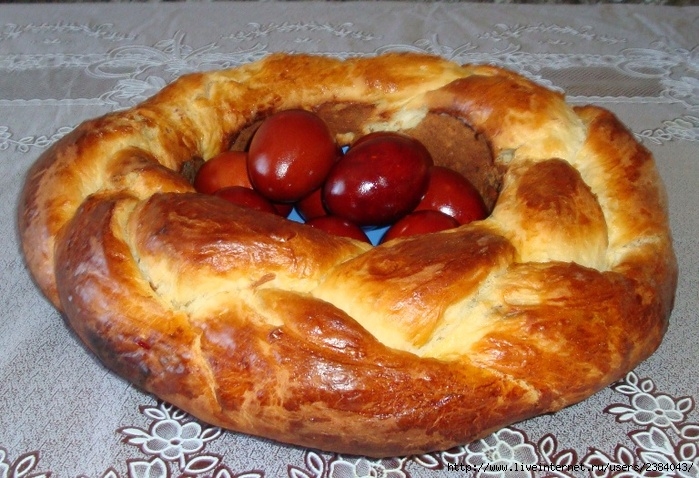
Next Easter day is a day of joy and triumph against cold and darkness. Spring holiday and resurrection! Armenians have preserved the beautiful biblical lore which refers to red eggs and cheorek (sweet bread): “When Christ was crucified, his mother took some eggs and bread wrapped in the shawl. When the Mother saw her Son crucified and his arms bleeding, she knelt down and cried. The Mother’s tears and Son’s blood dropping on the shawl colored the eggs and bread. Then the Mother put the shawl on her head. Since that day people began coloring eggs red on Easter day and women began wearing shawls when visiting church.

Everywhere in Armenia in Yerevan and in every city Easter is celebrated with traditional events, dishes, songs, greetings. Especially remarkable are revels and merriments in Ejmiadzin, Dilijan, Garni and in many other places. Armenia hotels offer Easter discounts.

The Easter atmosphere will be proliferated upon everyone. Special Easter liturgy will be held in Main Cathedral of Armenia in Ejmiatsin and in all other acting churches.  Garni Pagan Temple also will join the celebrations and provide traditional Easter eggs, as presents.

Minggu, 27 Maret 2011

Garni Will Welcome Guests at the New Visitor Center


On Friday 25th of March they opened their doors in Garni.  This was a joint project between the Ministry of Economy and UNESCO office.  The Garni Visitors' Center is in the House of Culture, on a small square, about 200 meters away from the temple.  After the presentation we toured in the area.

First we visited the temple, which also now has a crafts store and booths with goodies and sweets made by the locals.  The gates were crowded with Iranian, was windy and cold.  The gorge was magnificent, as always.  Now entrance ticket is required for getting in.

Next stop was at Geghard, where the priest was uncomfortable with the crowd of Iranian, who had to be shown how to behave in the Monastery.  The local people here were ready too, with the music, goodies and crafts, even the crafts seller speaking Persian language :)


Our guide was Alina, "garnetsi", mean from Garni, and she was brilliant.  Vaghinak, the head of the Visitors' Center prepared another show for us: lavash-baking, and which was more important for hungry people, - eating barbecue and fish. The dinner was decorated by the "Shvi player" and Priest singing Komitas.

Success and green way to the Garni Visitors' Center.  This was a nice and also promising start.